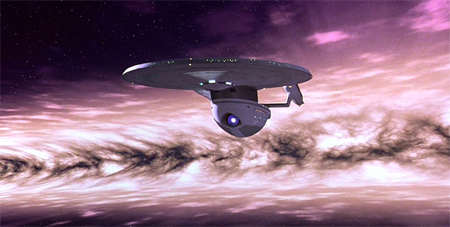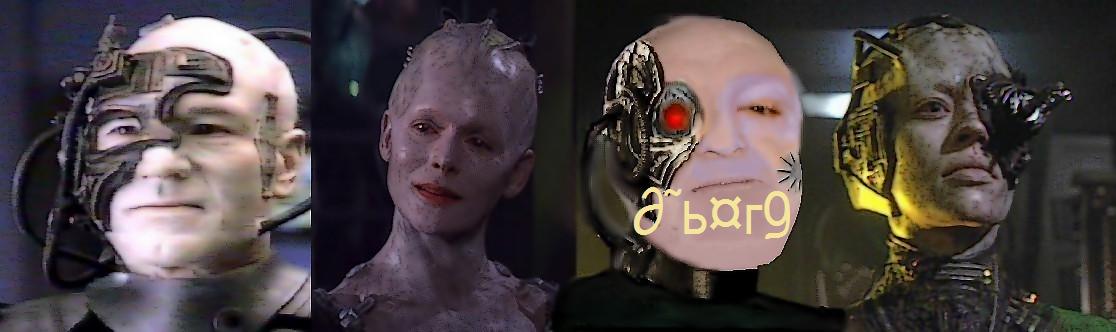
WE ARE THE BORG....

....Resistance is futile...
Space: the final frontier. These are the voyages of the starship Enterprise. Its five-year mission: to explore strange new worlds, to seek out new life and new civilizations; to boldly go where no man has gone before.

Tuesday, 10 November 2009

Star Trek II: The Wrath of Khan


Star Trek II: The Wrath of Khan is a 1982 motion picture released by Paramount Pictures. The film is the second feature based on the Star Trek science fiction franchise. The plot features James T. Kirk (William Shatner) and the crew of the starship USS Enterprise facing off against the genetically-engineered tyrant Khan Noonien Singh (Ricardo Montalbán), a character who first appeared in the 1967 Star Trek television series episode "Space Seed". When Khan escapes from a 15-year exile to exact revenge on Kirk, the crew of the Enterprise must stop him from acquiring a powerful terraforming device named Genesis. The film concludes with the death of Enterprise crewmember Spock (Leonard Nimoy), beginning a story arc that continues through 1986's Star Trek IV: The Voyage Home.
After the lackluster critical and commercial response to Star Trek: The Motion Picture, series creator Gene Roddenberry was forced out of the sequel's production. Executive producer Harve Bennett wrote the film's original outline, which Jack B. Sowards developed into a full script. Director Nicholas Meyer completed the final script in 12 days, without accepting a writing credit. Meyer's approach evoked the swashbuckling atmosphere of the original series, and the theme was reinforced by James Horner's musical score. Leonard Nimoy only reprised his role as Spock because the character's death was intended to be irrevocable. Negative test audience reaction to Spock's death led to significant revisions of the ending without Meyer's consent. The production used various cost-cutting techniques to keep within budget, including utilizing miniatures from past projects and re-using effects footage from the previous movie. Among the film's technical achievements is the first complete feature film sequence created entirely with computer-generated graphics.
The Wrath of Khan was released in North America on June 4, 1982. It was a box office success, earning US$97 million worldwide and setting a world record for first-day box office gross. Critical reaction to the film was positive; reviewers highlighted Khan, the film's pacing and the character interactions as strong elements. Negative reaction focused on weak special effects and some of the acting. The Wrath of Khan is generally considered one of the best films of the Star Trek series and is credited with creating renewed interest in the franchise.


The film opens with the Vulcan Lieutenant Saavik in command of the starship USS Enterprise. The vessel is on a rescue mission to save the crew of a damaged ship in the Neutral Zone along the border with Klingon space when it is attacked by Klingon cruisers and critically damaged. The "attack" is revealed to be a training exercise known as the "Kobayashi Maru"; a no-win situation designed to test the character of Starfleet officers. Admiral James T. Kirk oversees the simulator session of Captain Spock's trainees.[1]
The USS Reliant is on a mission to search for a lifeless planet for testing of the Genesis Device, a torpedo that reorganizes matter to create hospitable worlds for colonization. Reliant officers Commander Pavel Chekov and Captain Clark Terrell beam down to the surface of a possible candidate planet, Ceti Alpha VI, where they are captured by Khan Noonien Singh. Khan and his fellow genetically-advanced supermen were once rulers of late 20th century Earth, but after their defeat they escaped into space in a sleeper ship. The Enterprise discovered Khan's ship adrift in space fifteen years previously; Kirk exiled Khan and his followers to Ceti Alpha V after the supermen nearly captured his ship. Khan reveals that after they were marooned, Ceti Alpha VI exploded, destroying Ceti Alpha V's ecosystem and shifting its orbit. Khan blames Kirk for the death of his wife and plans to avenge her. He implants Chekov and Terrell with indigenous, mind-controlling eels that enter the ears of their victims and uses the officers to gain control of the Reliant. Learning of the existence of Genesis, Khan attacks Space Station Regula I where the device is being developed by Kirk's former lover, Dr. Carol Marcus, and their son, David.[2]
The Enterprise embarks on a training voyage under the command of Spock. Kirk takes command of the Enterprise after the ship receives a distress call from Regula I. En route, the Enterprise is ambushed by the Reliant. The attack cripples the Enterprise and many of its trainees are killed. A transmission between the two ships reveals Khan knows of the Genesis Device and wants all materials related to the project sent to him. Kirk stalls for time and disables the Reliant's defenses by transmitting a prefix code, allowing the Enterprise to counter-attack. Khan is forced to retreat and effect repairs, while the Enterprise limps to Regula I. Kirk, McCoy and Saavik beam to the station, where they find Terrell and Chekov, along with slaughtered members of the Genesis Project. The team finds the remaining scientists, including Carol and David, hidden deep inside the planetoid of Regula. Using Terrell and Chekov as spies, Khan steals the Genesis Device and orders them to kill Kirk; Terrell resists the eel's influence and kills himself while Chekov faints. Though Khan believes his foe stranded on Regula I, Kirk and Spock use a coded message to arrange a rendezvous and pilot the Enterprise into the nearby Mutara Nebula; static discharges from the nebula render both ships' defensive shields useless and compromise targeting systems, making the Enterprise and Reliant evenly matched. Kirk uses Khan's inexperience in three-dimensional combat to critically disable the Reliant.
Mortally wounded, Khan activates the Genesis Device, which will reorganize all matter in the nebula—including the Enterprise. Though Kirk's crew detects the activation of the Genesis Device and the Enterprise attempts to move out of range using impulse engines, with the warp drive damaged they will not be able to escape the nebula in time. Spock leaves the bridge and goes to the engine room to restore the warp drive. When McCoy tries to prevent Spock's exposure to high levels of radiation, he disables the doctor and performs a mind meld, telling him to "Remember". Spock restores power to the warp drive and the Enterprise escapes the explosion. Kirk arrives in the engine room, where Spock dies of radiation poisoning. The explosion of the Genesis Device causes a planet to coalesce out of the nebula. A space burial is held in the Enterprise's torpedo room and Spock's coffin is shot into orbit around the newly formed planet. The crew leaves the planet to pick up the Reliant's marooned crew from Ceti Alpha V. In the final scene Spock's coffin is seen to have soft-landed on the planet. Spock narrates Star Trek's "Where no man has gone before" monologue as the view moves forward into a field of stars.[3]


Monday, 9 November 2009

Star Trek III: The Search for Spock


Star Trek III: The Search for Spock is a 1984 motion picture released by Paramount Pictures. The film is the third feature based on the Star Trek science fiction franchise. After the death of Spock (Leonard Nimoy) during the events of The Wrath of Khan, the crew of the USS Enterprise returns to Earth. When James T. Kirk (William Shatner) learns that Spock's essence or katra is held in the mind of Leonard McCoy (DeForest Kelley), Kirk and company steal the Enterprise in order to return Spock's body to his home planet; the crew must contend with hostile Klingons bent on stealing the secrets of a powerful terraforming device.
After positive critical and commercial reaction to The Wrath of Khan, Paramount commissioned a new film. Nimoy took over directing duties, the first Star Trek cast member to do so. Producer Harve Bennett wrote the script starting from the end and working back, and intended the destruction of the Enterprise to be a shocking development. Bennett and Nimoy collaborated with effects house Industrial Light & Magic to develop storyboards and new ship designs; ILM also handled the film's many special effects sequences. James Horner, The Wrath of Khan's composer, returned to expand his themes from the previous film.

The Search for Spock opened June 1, 1984. In its first week the film broke Indiana Jones and the Temple of Doom's gross records, making $16 million in almost 2000 theaters across the United States. The film went on to make $76 million in the domestic box office and a total of $87 million worldwide. Critical reaction to The Search for Spock was mixed; critics called the film a compromise between the first and second films. The Search for Spock was released on multiple home video formats, including VHS, DVD, and Blu-ray high definition discs. Nimoy would go on to direct The Search for Spock's sequel, Star Trek IV: The Voyage Home.


The starship Enterprise limps back to Earth following a battle with the superman Khan Noonien Singh, who had tried to destroy the Enterprise by detonating an experimental terraforming device known as Genesis. The casualties of the fight include Admiral James T. Kirk's Vulcan friend, Spock, whose casket was launched into orbit around the newly-formed planet created by the Genesis Device. On arriving at Earth Spacedock Doctor Leonard McCoy begins to act to strangely. Starfleet Admiral Morrow visits the Enterprise and informs the crew the ship is due to be decommissioned; a return visit to the Genesis planet is forbidden due to political fallout over the Device.

David Marcus—Kirk's son, a key scientist in Genesis' development—and the Vulcan Saavik return to the Genesis planet aboard the science vessel Grissom and, to their surprise, discover a life form on the surface. Marcus and Saavik transport to the planet and find that Spock has been resurrected by the Genesis Device's effects, although his mind is not present. Marcus, pressed by Saavik, admits that he used unstable "protomatter" in the construction of the Genesis device, with the result that Spock is rapidly aging and the planet will be destroyed in mere hours. Meanwhile, a Klingon commander named Kruge intercepts information about Genesis. Believing the Genesis Device a potent weapon, he takes his cloaked ship to Genesis, destroys the Grissom, and captures Marcus, Saavik, and Spock.
Spock's father Sarek confronts Kirk about his son's death. The pair learns that before he died, Spock transferred his "katra" or living spirit to McCoy. Both Spock's katra and body are needed to lay him to rest on his homeworld, Vulcan, and without help McCoy will die from carrying the katra. Disobeying orders, Kirk and his officers spring McCoy from detention, disable the USS Excelsior, and steal the Enterprise from Spacedock to return to Genesis. In orbit on arrival at the Genesis planet the Enterprise is attacked and disabled by Kruge. In the standoff that follows Kruge orders one of the hostages on the surface be executed and in a brief struggle David is killed defending Saavik. Kirk and company feign surrender, and activate the Enterprise's self-destruct sequence, killing the Klingon boarding party while transporting to the surface. Promising the secret of Genesis, Kirk lures Kruge to the planet and has him beam his crew to the Klingon vessel. As the Genesis planet disintegrates, Kirk and Kruge engage in hand-to-hand combat; Kirk emerges victorious after kicking the Klingon off a cliff. Overwhelming the last member of the Klingon crew, Kirk and his officers set a course for Vulcan. Spock's katra is reunited with his body in a dangerous procedure called fal tor pan. The ceremony is successful and Spock is resurrected alive and well, though his memories are extremely fragmented. At Kirk's prompting, Spock remembers his name and recognizes the crew.

Sunday, 8 November 2009

Star Trek IV: The Voyage Home


Star Trek IV: The Voyage Home is a 1986 motion picture released by Paramount Studios. It is the the fourth feature film based on the Star Trek science fiction television series. It completes the story begun in Star Trek II: The Wrath of Khan and continued in Star Trek III: The Search for Spock. Intent on returning home to Earth to face trial for their crimes, the former crew of the USS Enterprise travels to Earth's past in order to save their present from a probe attempting to communicate with long-dead humpback whales.
After directing The Search for Spock, cast member Leonard Nimoy was asked to direct the next feature, and given greater freedom to the film's content. Nimoy and producer Harve Bennett conceived a story with an environmental message. After dissatisfaction with the first script produced by Steeve Meerson and Peter Krikes, Paramount hired The Wrath of Khan writer and director Nicholas Meyer, who collaborated with Bennett to rewrite the script.
James Horner, the composer for the previous two films, declined to return; Nimoy's friend Leonard Rosenman was given the job instead.
The film earned four Academy Award nominations, for Best Cinematography, Best Effects, Best Music and Best Sound.

The film begins three months after the events of Star Trek III: The Search for Spock as a large cylindrical object moves through space heading towards Earth, sending out an indecipherable signal and disabling the power of any vessel or station that it passes. As it takes up orbit around Earth, it continues signaling, disrupting the global power system and causing extreme weather patterns to develop over the planet while evaporating the oceans. Starfleet Command, on the last of its power reserves, sends out a subspace signal warning of the danger.
On the planet Vulcan, the former officers of the USS Enterprise are living in exile. Accompanied by the Vulcan Spock, still recovering from his resurrection, the crew takes their seized Klingon starship and head to Earth, intending to face trial for their theft and destruction of the Enterprise. As they enter the solar system, they hear Starfleet's warning and the alien signal; Spock determines that it matches the song of humpback whales, long since extinct on Earth, and that the object will continue to wreak havoc on the planet until it can be answered. The crew devise a plan to slingshot around the Sun to time travel back to the late 20th century and return with a whale.

The crew travels back in time to the year 1986, but their ship's power is drained in the process. Hiding their ship using its cloaking device in San Francisco, the crew splits up to accomplish their tasks: James T. Kirk and Spock attempt to locate humpback whales, Montgomery Scott, Leonard McCoy and Hikaru Sulu must create a holding tank for the return trip, and Uhura and Pavel Chekov search for a way to recharge the ship. Kirk and Spock discover a pair of humpback whales—"George" and "Gracie"—in the care of Dr. Gillian Taylor at the Cetacean Institute and learn they will soon be released into the wild. Kirk attempts to learn the tracking codes for the whales from Taylor, but is rebuffed. Scott, McCoy, and Sulu procure the necessary materials for the holding tank by giving the formula to transparent aluminum to a local manufacturer; Uhura and Chekov beam aboard a nuclear-powered aircraft carrier and draw some of its power to recharge their ship, but are discovered. Though Uhura is beamed back, Chekov is captured by the United States Navy and severely injured in an escape attempt. Kirk and the rest of the crew manage to rescue him and return to the ship.
The ship is successfully recharged, but Taylor arrives and tells Kirk that the whales have been moved early. Kirk reluctantly lets her tag along on the ship in order to get the tracking codes. The crew locates George and Gracie before they are killed by whalers, and transport the creatures into the waiting tank. With the intended cargo, the crew returns to the future. On approaching Earth, the ship loses power and crashes into San Fransisco Bay. Once released, the whales respond to the probe's signal, causing the object to restore Earth and return to the depths of space. The Enterprise crew's charges are all waived in light of their heroic efforts. Only Kirk is punished for disobeying a superior officer, and is demoted from Admiral to Captain. Having been brought to the future, Taylor takes a position on a science vessel. The crew departs for their new ship, which they learn is the newly-christened USS Enterprise (NCC-1701-A), and depart on another mission.


Saturday, 7 November 2009

Star Trek V: The Final Frontier


Star Trek V: The Final Frontier is a 1989 film released by Paramount Pictures and the fifth feature film based on the Star Trek science fiction television series. The film was directed by William Shatner, following two films directed by his co-star, Leonard Nimoy. Shatner also developed the initial storyline. It was shot entirely on location in California.
The year is 2287, and following the events of Star Trek IV: The Voyage Home, the crew of the USS Enterprise (NCC-1701-A) is on break enjoying shore leave, as the newly built starship's shakedown cruise goes poorly while it undergoes repairs in spacedock. On planet Earth at Yosemite National Park, Captain James T. Kirk is on a camping trip with half-Vulcan First Officer Spock and Dr. Leonard McCoy. Their leave is interrupted when the Enterprise is ordered by Starfleet Command to rescue Terran, Klingon and Romulan hostages on the desolate planet of Nimbus III; also referred to as the Planet of Galactic Peace. Learning of the Enterprise's mission, the Klingon Captain Klaa aboard a bird-of-prey, the Okrona, with the encouragement of his First Officer Vixis, decides to engage Kirk in combat for his own personal glory after growing tired pursuing and targeting derelict space debris.

Upon arrival at Nimbus III, the Enterprise crew discovers that a renegade Vulcan named Sybok (who is later revealed to be Spock's half-brother), is behind the hostage crisis. Sybok demonstrates that the hostage situation was a ruse to lure a starship to Nimbus III in order to reach the mythical planet called Sha Ka Ree, the place from which creation began. Sha Ka Ree is located behind a seemingly impenetrable barrier near the center of the galaxy. Sybok uses his unique ability to reveal the innermost pain of a person and help them emotionally heal themselves, in a bid to gain the trust of both the hostages and crew members. While McCoy and Spock agree to interact with hallucination imagery, Kirk refuses Sybok's offer, telling him that his emotional pain is part of what makes him human. Later however, Sybok reluctantly decides to declare a truce with Kirk, realizing he needs his leadership experience to navigate the Enterprise to Sha Ka Ree.

The Enterprise successfully breaches the barrier pursued by Klaa's vessel, and discovers a lone blue planet. Sybok, Kirk, Spock, and McCoy journey to the surface, where Sybok calls out to his perceived vision of god. An entity appears, and when told of how Sybok breached the barrier, demands that the starship be brought closer to the planet. When a skeptical Kirk inquires, "What does god need with a starship?", the entity attacks him in retribution. McCoy in turn, begins to realistically doubt the entity as a god who would purposely inflict harm on people for pleasure. The entity then tries to exploit the Enterprise; requesting to "Join with it", in an attempt to depart the surface. Soon Sybok starts to distrust the entity as genuine, at which point he suddenly sacrifices himself in a physical struggle with it to help the others escape. Kirk then orders the Enterprise to fire a photon torpedo at their location killing Sybok while simultaneously disabling the entity. Later, Spock and McCoy are beamed back to the ship, but Klaa's vessel attacks the Enterprise before Kirk can be transported aboard.
On the planet below, Kirk is about to be killed by the entity when Klaa's vessel destroys it in a barrage of disruptor fire. Kirk is beamed aboard the bird-of-prey and learns that Spock and the Klingon hostage (General Korrd), have forced Captain Klaa to stand down. A reception is held aboard the Enterprise with the Klingons to celebrate the new détente, as Kirk, Spock and McCoy return to their vacation at Yosemite.

Friday, 6 November 2009

Star Trek VI: The Undiscovered Country


Star Trek VI: The Undiscovered Country is the sixth feature film in the Star Trek science fiction franchise. It was released in 1991 by Paramount Pictures, and is the last of the Star Trek films to include the entire main cast of the 1960s Star Trek television series. It was directed by Nicholas Meyer and written by Meyer with Denny Martin Flinn. After an ecological disaster leads to two longstanding enemies—the Federation and the Klingon Empire—brokering a tenuous truce, the crew of the USS Enterprise-A must prevent war from breaking out on the eve of universal peace.
The Undiscovered Country was initially planned as a prequel to the original series, with younger actors portraying the crew of the Enterprise while attending Starfleet Academy, but the idea was discarded because of negative reaction from the cast and the fans. Faced with producing a new film in time for Star Trek's 25th anniversary, Flinn and Meyer, the director of Star Trek II: The Wrath of Khan, wrote a script based on a suggestion from Leonard Nimoy about what would happen if "the wall came down in space", touching on the contemporary events of the Cold War.
Principal photography took place between April and September 1991. The production budget was smaller than anticipated because of the critical and commercial failure of Star Trek V: The Final Frontier. Because of a lack of sound stage space on the Paramount Pictures lots, many scenes were filmed around Hollywood. Meyer and cinematographer Hiro Narita aimed for a darker and more dramatic mood, subtly altering redresses of sets originally used for the television series Star Trek: The Next Generation. Producer Steven-Charles Jaffe led a second unit that filmed on an Alaskan glacier that stood in for an alien gulag. Cliff Eidelman produced the film's score, which is intentionally darker than any previous Star Trek offering.
The film was released in North America on December 6, 1991. The Undiscovered Country garnered positive reviews, with publications praising the lighthearted acting and tongue-in-cheek references. The film performed strongly at the box office; it posted the largest opening weekend gross of the series before going on to earn $96,888,996 worldwide. The film earned two Academy Award nominations, for Best Makeup and Best Sound Effects, and is the only Star Trek movie to win a Saturn Award for Best Science Fiction Film. A special collectors' edition DVD version of the film was released in 2004, for which Meyer made minor alterations to his cut of the movie. Star Trek creator Gene Roddenberry died shortly before the movie's premiere.

The film opens with the explosion of the Klingon moon, Praxis. The USS Excelsior, commanded by Captain Hikaru Sulu, is struck by the shock wave and its crew discovers that much of the moon has been obliterated. The loss of their key energy production facility and the destruction of the Klingon homeworld's ozone layer throws the Klingon Empire into turmoil. No longer able to maintain a hostile footing, the Klingons sue for peace with their longstanding enemy, the United Federation of Planets. Starfleet sends the USS Enterprise-A to meet with the Klingon Chancellor, Gorkon, and escort him to negotiations on Earth. The decision does not sit well with the Enterprise's captain, James T. Kirk, whose son was murdered by Klingons years earlier.

The Enterprise rendezvous with Gorkon's battlecruiser and proceeds towards Earth, with the crews sharing a tense meal aboard the Enterprise. Late at night, the Enterprise appears to fire on the Klingon ship with a pair of torpedoes; the damage disables the artificial gravity aboard the vessel. During the confusion, two figures wearing Starfleet suits and gravity boots beam aboard the Klingon ship and wound Gorkon. Kirk surrenders to avoid a fight, and beams aboard the Klingon ship with Doctor Leonard McCoy in an effort to save Gorkon's life. The chancellor dies, and Gorkon's chief of staff, General Chang, puts Kirk and McCoy on trial for his assassination. The pair are found guilty and sentenced to life imprisonment on the frozen asteroid Rura Penthe. Gorkon’s daughter, Azetbur, becomes the new Chancellor, and pushes forward with diplomatic negotiations; for reasons of security, the conference's location is kept a secret. While several senior Starfleet officers want to rescue Kirk and McCoy, the Federation president refuses to risk full-scale war. Azetbur likewise refuses to invade Federation space, stating that only Kirk and McCoy will pay for her father's death.


Kirk and McCoy arrive at the Rura Penthe mines and are befriended by a shapeshifter named Martia, who offers them an escape route; in reality, it is a ruse to make their arranged deaths appear accidental. Once her betrayal is revealed, Martia transforms into his double and fights Kirk, but she is killed by the prison guards to silence any witnesses. Just before the prison warden reveals who set them up, Kirk and McCoy are beamed aboard the Enterprise by Captain Spock. While Kirk and McCoy were imprisoned, Spock assumed command and led an investigation into the attack on Gorkon's ship and the assassination. Determining that the Enterprise did not fire the torpedoes but that the assassins are still aboard, the crew begins looking for the traitors. The two assassins are found dead, but Kirk and Spock fool the traitor into believing they are still alive; when the culprit arrives in Sickbay to finish off the assassins, Kirk and Spock discover that the killer is Spock's protégé, Valeris. To discover the identity of the conspirators, Spock initiates a forced mind-meld, and learns that a group of Klingon, Starfleet, and Romulan officers plotted to sabotage the peace talks, and Chang is one of the conspirators. The torpedoes that struck Gorkon's cruiser came from a prototype Bird of Prey that can fire while cloaked, and hovered just below the Enterprise on the night of the assassination.
The crew contacts Sulu, who informs them the conference is being held at Camp Khitomer; both ships head for the talks at maximum warp. As it nears the planet, the Enterprise is intercepted by Chang's Bird of Prey. With the Enterprise unable to track his ship's position, Chang inflicts severe damage on the Enterprise and then the Excelsior. Spock and McCoy modify a photon torpedo to home in on the exhaust emissions of Chang's vessel. The torpedo impact reveals Chang's location, and the Enterprise and Excelsior destroy the Bird of Prey in a flurry of torpedoes. Crew from both ships beam to the conference and halt an attempt on the Federation president's life. Azetbur says Kirk has restored her father's faith; Kirk responds that she has restored his son's. Having saved the peace talks, the Enterprise is ordered back to Earth by Starfleet Command to be decommissioned, but the crew decide to take their time on the return voyage. As the Enterprise cruises towards a nearby sun, Kirk proclaims that though this mission is the final cruise of the Enterprise under his command, others will continue their voyages

Thursday, 5 November 2009

Star Trek Generations

Star Trek Generations is a 1994 science fiction film, and the seventh feature film based on the Star Trek science fiction television series. It is the first film in the series to star the cast of Star Trek: The Next Generation. It was shot in Overton, Nevada; Paramount Studios; and Lone Pine, California. While the film did reasonably well at the box office, it received mixed reviews from critics.
The story begins with retired Captain James T. Kirk reluctantly attending the maiden voyage of the USS Enterprise-B, which is running on a skeleton crew and has several major subsystems still under construction. During the voyage, Enterprise is pressed into a rescue mission to save two ships from a strange energy ribbon. The Enterprise is able to save some of the El-Aurian refugees, including Dr. Tolian Soran and Guinan before both ships are destroyed, but then becomes trapped in the ribbon itself. Kirk travels to the Engineering decks to alter the behavior of the deflector shields, allowing the Enterprise to escape. The Energy Ribbon makes contact with the engineering hull and causes major damage, as the crew recovers, they find the section that Kirk was in has been exposed to space, Kirk himself missing, presumed dead.

Seventy eight years later, during a ceremony for the promotion of Worf to Lieutenant Commander, the crew of the USS Enterprise-D receives a distress call from the Amargosa solar observatory. They find that everyone, except Soran, has been killed by the Romulans. Data, who recently installed his emotion chip, and Geordi LaForge search the station, discovering trilithium in a hidden room. As they analyze it, Soran appears and knocks LaForge unconscious, and threatens Data at gunpoint while launching a missile containing trilithium at the Amargosa star, causing all nuclear reactions within the star to cease. This sends a shock wave, capable of destroying a planet, towards the station and the Enterprise. Soran and LaForge are transported to a Klingon Bird of Prey belonging to the Duras sisters, while Data is rescued by Worf and Commander Riker just before the station is destroyed.

Captain Picard learns of Soran's past and turns to Guinan for help. Guinan explains that Soran's goal is to return to the "Nexus", the energy ribbon the Enterprise-B encountered. Picard and Data perform an analysis to track the path of the ribbon, observing the effects of the local gravitational field on it and altered by Soran's actions. They determine that Soran is likely attempting to reenter the Nexus on Veridian III by destroying its star. As one planet in the system is heavily populated, Picard orders the Enterprise to the Veridian system to stop Soran. Upon arrival, they encounter the Duras sisters who offer to trade LaForge for Picard, which he accepts. Picard is transported to the planet's surface and finds Soran working on another missile installation, shielded to prevent Picard from interfering. LaForge is brought back aboard the Enterprise, unaware that his visor is transmitting a signal to the Klingons. When the Duras sisters discover the Enterprise's critical shield frequency, they launch an all-out attack on the ship. The Enterprise is able to counterattack and destroy the Bird of Prey, but has taken critical damage to the warp core. Riker orders an evacuation to the saucer section and subsequent separation before the core explodes. The saucer section is forced to crash land on Veridian III.
Meanwhile, Picard has found a hole in Soran's shield, but is too late to stop him from launching the missile. The Veridian sun goes supernova, destroying all the planets and the Enterprise saucer section, but Picard finds himself safely in the Nexus. After encountering a ghost of Guinan, Picard finds that Kirk is also safe in the Nexus. Picard approaches Kirk as one Starfleet officer to another, and convinces him to return to Picard's present to help stop Soran. Though initially apathetic and distracted by the flood of memories, Kirk eventually agrees, and the two leave the Nexus, ending up on Veridian III minutes before Soran launches the missile. Together, they are able to distract Soran long enough to lock the missile in place, causing it to explode on the launchpad, killing Soran. However, Kirk is mortally wounded from the encounter, and as he dies, Picard assures him that Kirk helped to make a difference. Picard buries Kirk before traveling to the wreckage of the saucer section and reuniting with his crew as they are evacuated from the planet.


Wednesday, 4 November 2009

Star Trek: First Contact


Star Trek: First Contact is the eighth feature film in the Star Trek science fiction franchise, released in November 1996 by Paramount Pictures. First Contact is the first film in the franchise to exclusively feature the cast of the Star Trek: The Next Generation television series. The television cast is joined by Alice Krige, Neal McDonough, James Cromwell and Alfre Woodard. In the film's plot, the crew of the USS Enterprise travel from the 24th to 21st century to save their future after the cybernetic Borg conquer Earth by changing the timeline.
After the release of the seventh film, Star Trek Generations, in 1994, Paramount tasked writers Brannon Braga and Ronald D. Moore with developing a sequel. Braga and Moore wanted to feature the Borg in the plot, while producer Rick Berman wanted a story involving time travel. The writers combined the two ideas; they initially set the film during the European Renaissance, but changed the time period the Borg corrupted to the mid-21st century after fearing the Renaissance idea would be too kitschy. After two better known directors turned down the job, cast member Jonathan Frakes was chosen to direct to make sure the task fell to someone who understood Star Trek.
The script required the creation of new starship designs, including a new USS Enterprise. Production designer Herman Zimmerman and illustrator John Eaves collaborated to make a sleeker ship than its predecessor. Principal photography began with weeks of location shooting in Arizona and California before production moved to new sets for the ship-based scenes. The Borg were redesigned to appear as though they were converted into machine beings from the inside-out; the new makeup sessions took four times as long as on the television series. Effects company Industrial Light & Magic rushed to complete the film's special effects in less than five months. Traditional optical effects techniques were supplemented with computer-generated imagery. Jerry Goldsmith and his son Joel collaborated to produce the film's score.
First Contact was the highest-grossing film on its opening weekend, making $30.7 million. The film made $92 million in the United States and an additional $57.4 million in other territories, for a theatrical run of about $146 million worldwide. Critical reception was mostly positive; critics including Roger Ebert considered it one of the best Star Trek films. The Borg and the special effects were lauded, while characterization was less evenly received. First Contact was nominated for an Academy Award for Best Makeup and won three Saturn Awards. The film has been released on videotape, LaserDisc, DVD, and Blu-ray home video formats. Scholarly analysis of the film has focused on Captain Jean Luc Picard's parallels to Herman Melville's Ahab and the nature of the Borg.


Captain Jean Luc Picard awakens from a nightmare in which he relived his assimilation by the cybernetic Borg six years earlier (previously shown in the television episode "The Best of Both Worlds"). He is contacted by Admiral Hayes, who informs him of a new Borg attack against Earth. Picard's orders are for his ship, the USS Enterprise-E, to patrol the Neutral Zone in case of Romulan aggression; Starfleet is worried that Picard is too emotionally involved with the Borg to join the fight. Learning the fleet is losing the battle, the Enterprise crew disobeys orders and heads for Earth, where a single Borg Cube ship holds its own against a group of Starfleet vessels. The Enterprise arrives in time to save the crew of the USS Defiant and its captain, the Klingon Worf. Picard takes control of the fleet and directs the surviving ships to concentrate their firepower on a seemingly unimportant point on the Borg ship.[1] The Cube is destroyed after launching a smaller sphere ship towards the planet. The Enterprise pursues the sphere into a temporal vortex. As the sphere disappears, the Enterprise discovers Earth has been altered—it is now populated entirely by Borg. Realizing the Borg have used time travel to change the past, the Enterprise follows the sphere through the vortex.[2]
The Enterprise arrives hundreds of years in the past, to April 4, 2063, the day before humanity's first encounter with alien life after Zefram Cochrane's historic warp drive flight; the crew realizes the Borg are trying to prevent first contact. After destroying the Borg sphere, an away team transports down to Cochrane's ship, the Phoenix, in Montana. Picard has Cochrane's assistant Lily Sloane sent back to the Enterprise for medical attention. The Captain returns to the ship and leaves Commander William T. Riker on Earth to make sure the Phoenix's flight proceeds as planned.[3] While in the future Cochrane is seen as a hero, the real man is reluctant to assume the role the Enterprise crew describe.[2]

A group of Borg invade the Enterprise's lower decks and begin to assimilate its crew and modify the ship. Picard and a team attempt to reach engineering to disable the Borg with a corrosive gas, but are forced back; the android Data is captured in the melee. A frightened Sloane corners Picard with a weapon, but he gains her trust. The two escape the Borg-infested area of the ship by creating a diversion in the holodeck.[3] Picard, Worf, and the ship's navigator, Lt. Hawk, travel outside the ship in space suits to stop the Borg from calling reinforcements by using the deflector dish. As the Borg continue to assimilate more decks, Worf suggests destroying the ship, but Picard angrily calls him a coward and vows to continue the fight. Sloane confronts the captain and makes him realize he is acting irrationally due to his desire for revenge. Chastened, Picard relents and orders the activation of the ship's self-destruct mechanism. While the crew head for escape pods, the Captain decides to stay behind and rescue his friend Data.[4]
As Cochrane, Riker, and engineer Geordi La Forge prepare to activate the warp drive on the Phoenix, Picard discovers that the Borg Queen has grafted human skin onto Data, and with it an array of new sensations. She has presented this modification as a gift to the android, hoping to obtain the android's encryption codes to the Enterprise computer. Although Picard offers himself to the Borg in exchange for Data's freedom, Data refuses to leave. He deactivates the self-destruct sequence and fires torpedoes at the Phoenix. At the last moment the torpedoes miss, and the Queen realizes Data betrayed her.[4] The android ruptures a coolant tank, and the corrosive vapor eats away the biological components of the Borg. With the Borg threat neutralized, Cochrane completes his warp flight.[2] The next day the crew watches from a distance as an alien Vulcan ship, attracted by the Phoenix warp test, lands on Earth. Cochrane and Sloane greet the aliens. Having ensured the correction of the timeline, the Enterprise crew slip away and return to the 24th century

Tuesday, 3 November 2009

Star Trek: Insurrection

Star Trek: Insurrection is a 1998 science fiction feature film, directed by Jonathan Frakes, written by Michael Piller (with the story developed by Rick Berman and Piller), and with music composed by Jerry Goldsmith. It is the ninth film in the Star Trek franchise, and the third to feature the cast from the television series Star Trek: The Next Generation. It revolves around the insurrection of the USS Enterprise-E as they discover that Starfleet has been conspiring with a species known as the Son'a to steal the planet of the peaceful Ba'ku for themselves.
The film received a mixed reception from critics, with a general consensus that it seemed to be little more than a "glorified episode of the television series".
Lt. Cmdr. Data (Brent Spiner) loses control while observing the peaceful Ba'ku people on their homeworld, revealing the presence of the joint Federation and Son'a taskforce to the Ba'ku. Admiral Matthew Dougherty (Anthony Zerbe) requests the help of the USS Enterprise-E to help them capture and repair Data. Though they are able to do so, Captain Picard (Patrick Stewart) becomes suspicious of Dougherty's insistence that the Enterprise is no longer needed, and instead has his crew investigate the cause for Data's malfunction. They come to find that the Ba'ku are well aware of technology but have opted to reject it, instead living in harmony with nature, and they also later reveal they are much older than they appear. Picard asks Anij, the unofficial Ba'ku leader, "You have warp capability?" to which she replies mildly, "Capability, yes...but where can warp drive take us, except away from here?"

The Enterprise crew also begins to experience the rejuvenation effects of the planet; LaForge (Levar Burton) finds his eyes can see instead of requiring Optical Implants, Riker (Jonathan Frakes) and Troi (Marina Sirtis) rekindle their long-abandoned relationship, and even Picard experiences romantic feelings for the Ba'ku woman Anij (Donna Murphy).
The crew discovers that the Briar Patch, the area of space that the Ba'ku homeworld is located, contains metaphasic radiation particles, more concentrated in the planet's rings, which impart the rejuvenation effects to those exposed to them but also block communications to the rest of space. They also discover a cloaked Federation ship that contains a gigantic holodeck recreating the Ba'ku village; Data's malfunction was apparently caused by his previous discovery of this ship. Picard surmises that corrupt Federation officers and the Son'a are attempting to collect the metaphasic particles with a large harvester. This would leave the planet uninhabitable, and Dougherty, who would not allow for the destruction of the Ba'ku, prepared the "holoship" to transport the Ba'ku off the planet without their knowledge. When confronted with these charges against the Prime Directive, Dougherty orders the Enterprise to leave.

Picard orders Riker to take the Enterprise out of the Briar Patch in order to communicate the situation with the Federation while he and others beam down to the planet to help the Ba'ku evacuate to nearby caves that will prevent them from being transported. While the Son'a send out robotic probes to tag the fleeing Ba'ku, allowing them to be transported individually, the Son'a leader Adhar Ru'afo (F. Murray Abraham) convinces Dougherty to allow him to send two Son'a ships to attack the Enterprise. Riker is able to destroy one ship and cripple the other through a risky maneuver and continues to leave the Briar Patch. With their plan exposed, Ru'afo insists that they must begin to harvest the metaphasic particles immediately, only to have Picard deliver a revelation: the Son'a and the Ba'ku are the same race. The Son'a are a breakaway Ba'ku faction who failed to convince the rest of the colony to embrace "offlander" ways, were exiled and have spent a century since trying (and failing) to preserve their lives; hence their desperate attempt to harvest the metaphasic particles. Dougherty then confronts Ru'afo, who kills him when he refuses to allow Ru'afo's scheme to continue.
Picard, his crew, and the Ba'ku are eventually transported onto the Son'a ship, but manage to break free. They then use the ship to transport Ru'afo and the Son'a from their ship to the holoship, making them believe they are still in their bridge as they launch the harvester. Ru'afo eventually discovers the deception, and transports to the harvester to start it himself. Picard defeats Ru'afo and activates the harvester's self-destruct mechanism, killing Ru'afo as it explodes. The remaining Son'a are welcomed back by the Ba'ku who forgive them for their actions, this process beginning when Picard arranges a meeting between Gallatin (who, then, was Gal'na) and his mother. The Enterprise crew take one last moment to enjoy their rejuvenated selves before returning to their mission.

Monday, 2 November 2009

Star Trek Nemesis

Star Trek Nemesis is a 2002 science fiction film directed by Stuart Baird, written by John Logan (from a story developed by Logan and Rick Berman), and with music composed by Jerry Goldsmith. It is the tenth feature film in the Star Trek franchise, and the fourth and final film to star the cast from the television series Star Trek: The Next Generation. It follows the mission of the crew of the USS Enterprise-E as they are forced to deal with a threat to the United Federation of Planets from a Reman named Shinzon who has taken control of the Romulan Star Empire in a coup.
Nemesis acted as a swan song for The Next Generation cast, as could be seen from the film's tagline of "A generation's final journey begins". The film was the least commercially successful in the franchise, and was poorly received by the majority of critics.[1] Reviews also opined that the response to the film was evidence that the franchise had become stale.
The film opens with a major political assassination — what appears to be the elimination of the leadership of the Romulan government.

As the crew of the USS Enterprise prepares to bid farewell to longtime first officer William T. Riker (Jonathan Frakes) and Counselor Deanna Troi (Marina Sirtis), who are soon to be married on Betazed, an away team discovers the remnants of an android resembling Lieutenant Commander Data (Brent Spiner) on a planet close to the Romulan Neutral Zone called Kolarus III. When the android is reassembled, it reveals its name as B-4, a predecessor to Data.
The ship is then ordered by Vice Admiral Kathryn Janeway (Kate Mulgrew) to conduct a diplomatic mission to the Romulan Star Empire, which has undergone a military coup and is now controlled by a mysterious young Reman named Praetor Shinzon (Tom Hardy). This is a surprising development, given that Remans are considered something of a "sub-race" to the Romulans, who generally use them as slave labor.
Upon their arrival at Romulus, the crew learns that Shinzon is actually a clone of Captain Jean-Luc Picard. While he claims to want peace and freedom for the Remans (which, as explained in the novelization, is entirely in keeping with the meaning of his name, which is Reman for "Liberator"), he also unveils his newest ship, a heavily armed warship named Scimitar.

Shinzon's plan soon becomes apparent. Picard has been lured to Romulus to be kidnapped so that a dying Shinzon can receive a genetic transfusion from the source of his DNA. His Scimitar has been designed to destroy Earth using a thalaron weapon and establish himself as the leader of a renewed Romulan Empire. Picard is rescued, with the Enterprise racing back to the Federation with the Scimitar in pursuit.
With the assistance of two Romulan war birds whose captains and crews now oppose Shinzon, a space battle ensues in which one war bird is destroyed and another severely damaged and forced to back off. The damaged Enterprise is eventually forced to ram the Scimitar to disable it from continuing on to Earth. Shinzon then activates the Scimitar's super weapon, bent on taking the Enterprise down with him. Picard boards the Scimitar to stop the weapon and ends up fighting Shinzon. The fight ends with Picard victorious, but unable to deactivate the weapon. Picard kills Shinzon by impaling him through the abdomen with a long piece of metal, which the murderously determined Shinzon then forces into his own body to get close enough to confront Picard.
Data arrives and has the captain beamed back to the Enterprise before ultimately sacrificing himself to shut down the weapon and destroy the ship.
While the severely damaged Enterprise is repaired in a space dock, Picard bids farewell to newly promoted Captain Riker who is off to command the USS Titan. Picard then meets with B-4, whereupon he learns that, much like when Spock's katra had been planted in Leonard McCoy's mind at the end of Star Trek II: The Wrath of Khan, Data had copied the seeds of his neural net into B-4's positronic matrix not long before his death, giving hope that B-4 may one day have the same capacity for growth that Data enjoyed and keeping Dr. Soong's legacy alive.

Sunday, 1 November 2009

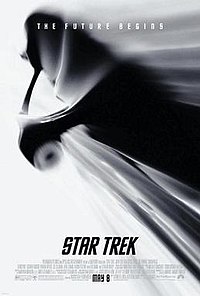
Star Trek

Star Trek is a 2009 science fiction film directed by J. J. Abrams, written by Roberto Orci and Alex Kurtzman, and distributed by Paramount Pictures. It is the eleventh film based on the Star Trek franchise and features the main characters of the original Star Trek television series, who are portrayed by a new cast. The film follows James T. Kirk (Chris Pine) and Spock (Zachary Quinto) before they unite aboard the USS Enterprise to combat Nero (Eric Bana), a Romulan from their future who threatens the United Federation of Planets. The story establishes an alternate reality[5][6] through time-travel by both Nero and the original Spock (Leonard Nimoy), freeing the film and the franchise from established continuity constraints.
Development of the film began in 2005. The production's aim was to be faithful to the Star Trek canon, modifying continuity with the time-travel storyline, and modernizing the production design of the original show. Filming took place from November 2007 to March 2008 under intense secrecy. Midway through the shoot, Paramount chose to delay the release date from December 25, 2008 to May 2009, believing the film could reach a wider audience.
Star Trek earned high critical praise, gaining a 95% on Rotten Tomatoes.[7] It is the eighth-highest-grossing film of 2009 — fifth-highest within the United States — and has become the highest-grossing film in the Star Trek series and is credited by the media as a reboot of the series.
In the year 2233, the Federation starship USS Kelvin is investigating a massive lightning storm in space, when a gigantic ship, the Narada, emerges from within the storm and attacks them. Before destroying it, the Narada's captain, Nero, orders the Kelvin to stand down and have the ship's Captain Robau come aboard to speak with him. Robau appoints George Kirk as acting captain and departs. On board the Narada, Nero's first officer, Ayel, interrogates Robau, asking if he knows an Ambassador Spock, but Robau says he does not recognize anyone by that name. When Ayel asks what year it is, Robau says it is 2233; thus the Romulans find out that they have been sent to the past. Nero kills Robau in a fit of rage, and orders the Kelvin to be destroyed. Kirk orders everyone to evacuate, but must remain behind to operate the ship's weapons, providing cover for those escaping. One of the shuttlecraft carries his pregnant wife, Winona, and seconds before the Kelvin collides with the Narada, she gives birth to a boy while George listens over the comm. They decide to name the baby James Tiberius, after both of their fathers. The Kelvin collides with the Narada, killing George, while the shuttlecrafts escape.
Several years later, a young Vulcan named Spock grows up on planet Vulcan and is discriminated against because of his half-human heritage, which leads him to join Starfleet. On Earth, James Tiberius Kirk grows up to be an intelligent, though reckless and cynical, young man. After a run-in at a local bar, Captain Christopher Pike challenges Kirk to emulate his father's heroism and convinces him to join Starfleet. En route to Starfleet Academy, Kirk befriends fellow cadet Leonard McCoy.
Three years later, Starfleet receives a distress signal from Vulcan that indicates the appearance of a lightning storm in space, and with the primary fleet engaged in an operation, the cadets are mobilized to help crew the ships in orbit. McCoy smuggles Kirk aboard the USS Enterprise. Kirk recognizes the similarities between this mission and the encounter that destroyed the Kelvin, and warns Pike that the fleet is heading into a trap. The Enterprise arrives at Vulcan to find the fleet destroyed and the Narada drilling into the planet's core. The Narada attacks the Enterprise and Nero orders Pike to surrender himself. Pike agrees, promoting Spock to captain and Kirk to first officer. En route to the Narada, Kirk and Hikaru Sulu perform an orbital skydive onto the drilling platform and destroy it. Nero launches red matter into the planet's core, imploding the planet into a black hole. Spock rescues some of the planet's elders, but his mother dies along with the majority of the planet's population. Nero sets course for Earth and tortures Pike for the command codes to its perimeter defenses.

After a heated argument about Spock ordering to rendezvous with the rest of the fleet, Kirk is marooned on Delta Vega for mutiny. On Delta Vega, Kirk encounters Ambassador Spock, who tells Kirk he is from the future and to save time, relays the future's events through a mind meld. In the year 2387, the galaxy is threatened by a massive supernova. Ambassador Spock pilots a ship carrying red matter, which will create an artificial black hole to consume the supernova. Before Spock completes his mission, the supernova destroys the planet Romulus. Captain Nero attempts to exact revenge on Spock, whom he blames for the destruction of his homeworld, and his family. Both ships, however, are pulled into the black hole's event horizon and travel into the past. The Narada arrives first and Spock arrives 25 years later, where he is captured by Nero and marooned on Delta Vega so that he can witness the destruction of Vulcan. Ambassador Spock insists that Kirk must become captain of the Enterprise and the two travel on foot to a nearby Starfleet outpost. There, they meet Montgomery Scott. Ambassador Spock beams Kirk and Scott aboard the Enterprise while he stays on the planet. Once aboard, Kirk deliberately enrages Commander Spock to force him to acknowledge that he is emotionally compromised, thereby forfeiting command to Kirk.

Spock, Scott, and Pavel Chekov devise a plan to ambush the Narada by hiding behind Saturn's moon, Titan. Once there, Kirk and Spock beam aboard the Narada. Kirk rescues Pike while Spock retakes Ambassador Spock's ship, destroys the drill, and lures the Narada away from Earth before piloting a collision course. The Enterprise arrives and beams Kirk, Pike, and Spock away before the collision, which ignites the remaining red matter and creates a black hole within the Narada. Kirk offers to rescue Nero and his crew, but he refuses and the Narada is destroyed. The Enterprise escapes the same fate by ejecting and then igniting the ship's warp drive, with the resulting explosion pushing them clear.
Back on Earth, Kirk is promoted to captain of the Enterprise. Soon after, Spock, while searching for his father, encounters his older self in a hangar. Ambassador Spock is departing to help establish a new colony with the remaining Vulcans. The younger Spock informs his older self of his wishes to leave Starfleet to aid his people. Ambassador Spock tells his younger self that he and Kirk need each other and that he should do what feels right. Taking his advice, Spock remains in Starfleet, becoming first officer under Kirk's command. Leonard Nimoy narrates the Star Trek tagline to close the film.